


The Third Eye Chakra, known in Sanskrit as Ajna, is the sixth of the seven primary chakras and is associated with intuition, wisdom, insight, and spiritual awareness. Located between the eyebrows, this energy center influences how you perceive yourself, interpret the world around you, and trust your inner guidance.
When the Third Eye Chakra is balanced, you experience greater mental clarity, intuition, creativity, and self-awareness. You feel more connected to your inner wisdom and better equipped to make thoughtful decisions. When blocked or imbalanced, you may struggle with confusion, overthinking, self-doubt, or difficulty trusting your instincts.
In this guide, you’ll discover the meaning of the Third Eye Chakra, signs of balance and imbalance, and practical ways to restore harmony through meditation, mindfulness, yoga, affirmations, and other supportive practices.
The Third Eye Chakra, or Ajna, is the sixth energy center in the traditional chakra system. It represents perception beyond the physical senses and encourages deeper awareness of yourself and the world around you.
Often referred to as the center of intuition and inner wisdom, this chakra helps you recognize patterns, reflect with clarity, and make decisions that align with your values and inner guidance.
The Third Eye Chakra is not about predicting the future or possessing supernatural abilities. Instead, it symbolizes the ability to see beyond surface appearances, develop self-awareness, and approach life with insight, mindfulness, and discernment.
When this chakra is balanced, intuition and rational thinking work together, allowing you to respond thoughtfully rather than react impulsively.
The Third Eye Chakra, or Ajna, is the energy center of intuition, inner wisdom, and higher awareness.
These key facts highlight its essential qualities and the role it plays in perception, clarity, and spiritual insight.

The Third Eye Chakra represents intuition, inner wisdom, and the ability to see beyond appearances. It influences how you interpret your experiences, understand yourself, and make decisions that align with your deepest values.
More than simply trusting a “gut feeling,” this chakra encourages self-reflection, mindfulness, and the ability to balance intuition with logic. It reminds us that true wisdom comes from combining knowledge, personal experience, and inner awareness.
When the Third Eye Chakra is balanced, you become more aware of your thoughts, recognize patterns more easily, and approach life’s challenges with greater clarity and perspective.
It influences many areas of mental and emotional well-being, including:
Intuition:
Developing confidence in your inner guidance and learning to recognize subtle insights that arise through reflection, experience, and mindfulness. A balanced Third Eye Chakra encourages you to trust your instincts while remaining open to learning and growth.
Mental Clarity:
Seeing situations more objectively and making thoughtful decisions instead of reacting impulsively. Greater clarity allows you to focus on what truly matters while reducing unnecessary mental distractions.
Self-Awareness:
Understanding your thoughts, emotions, habits, and beliefs with honesty and curiosity. Self-awareness creates opportunities for personal growth by helping you recognize patterns that may no longer serve you.
Inner Wisdom:
Looking beyond immediate circumstances to make choices aligned with your long-term well-being and personal values. Inner wisdom develops through experience, reflection, and mindful observation.
Imagination and Creativity:
The Third Eye Chakra supports visualization, creative thinking, innovation, and the ability to explore new possibilities. It encourages curiosity while helping you transform ideas into meaningful action.
Discernment:
Discernment is the ability to distinguish between fear and intuition, facts and assumptions, or temporary emotions and lasting truth. This quality helps you make balanced decisions without becoming overwhelmed by uncertainty.
Spiritual Awareness:
Many spiritual traditions associate the Third Eye Chakra with a deeper connection to consciousness and personal growth. Rather than focusing on extraordinary experiences, spiritual awareness encourages presence, reflection, and a greater understanding of yourself and your place in the world.
When your Third Eye Chakra is balanced, you trust your intuition without ignoring reason. You become more present, mentally clear, and open to learning from both your inner experiences and the world around you.
The Third Eye Chakra is represented by the color indigo, a deep shade of blue often associated with wisdom, intuition, imagination, and expanded awareness. In many spiritual traditions, indigo symbolizes the search for truth and the ability to look beyond surface appearances.
Its sacred symbol is a two-petaled lotus, representing the integration of dualities such as intuition and logic, inner and outer awareness, or conscious and subconscious thought. At the center of the symbol is an inverted triangle, often interpreted as a reminder to direct awareness inward in the pursuit of deeper understanding.
Meditation practices commonly encourage visualizing an indigo light between the eyebrows as a way to cultivate mindfulness, focus, and self-reflection.
Unlike the lower chakras, which are associated with physical elements such as earth, water, fire, air, and ether, the Third Eye Chakra is connected to the element of Light.
Light symbolizes clarity, perception, wisdom, and the ability to see beyond confusion. Just as light illuminates what was previously hidden, the Third Eye Chakra encourages greater awareness of your thoughts, emotions, and life experiences.
This element also reminds us that true insight develops gradually through observation, reflection, and openness rather than immediate certainty.
The seed mantra of the Third Eye Chakra is OM (also written as AUM).
Many meditation practitioners chant this mantra to encourage mindfulness, concentration, and inner awareness. The sound is traditionally believed to represent the vibration of universal consciousness and is often used to quiet mental distractions while cultivating a deeper sense of presence.
Whether repeated aloud or silently, the purpose of chanting OM is to support focused attention and create space for reflection rather than force specific experiences.
When your Third Eye Chakra is balanced, you experience greater mental clarity, emotional awareness, and trust in your intuition.
You may notice:
Rather than becoming overwhelmed by every thought, you learn to observe your mind with greater calm and perspective.
When energy becomes restricted in the Third Eye Chakra, it may become more difficult to trust yourself or see situations clearly.
In many spiritual traditions, the Third Eye Chakra is associated with the brain, eyes, forehead, and nervous system.
Some people report experiences such as:

These associations belong to spiritual traditions and should not be interpreted as medical diagnoses. Persistent symptoms should always be evaluated by a qualified healthcare professional.
Many everyday experiences can make it more difficult to connect with your intuition and inner clarity.
Common causes include:
Over time, these patterns can leave you feeling mentally overwhelmed, disconnected from your inner guidance, and uncertain about the decisions you make.
The Third Eye Chakra is most closely associated with intuition, our ability to recognize subtle insights that go beyond logical analysis alone. Rather than being a mysterious or supernatural ability, intuition often develops through self-awareness, life experience, and mindful observation.
When this chakra is balanced, you become more confident in trusting your inner guidance while remaining open to facts, reason, and new perspectives. Instead of reacting impulsively, you learn to pause, reflect, and make decisions that align with both your values and your understanding of the situation.
Developing intuition is not about always having the right answers. It’s about learning to quiet external distractions so you can better recognize your own inner wisdom.
Mental clarity allows you to see situations with greater objectivity and understanding. It helps you organize your thoughts, focus on what truly matters, and avoid becoming overwhelmed by constant mental activity.
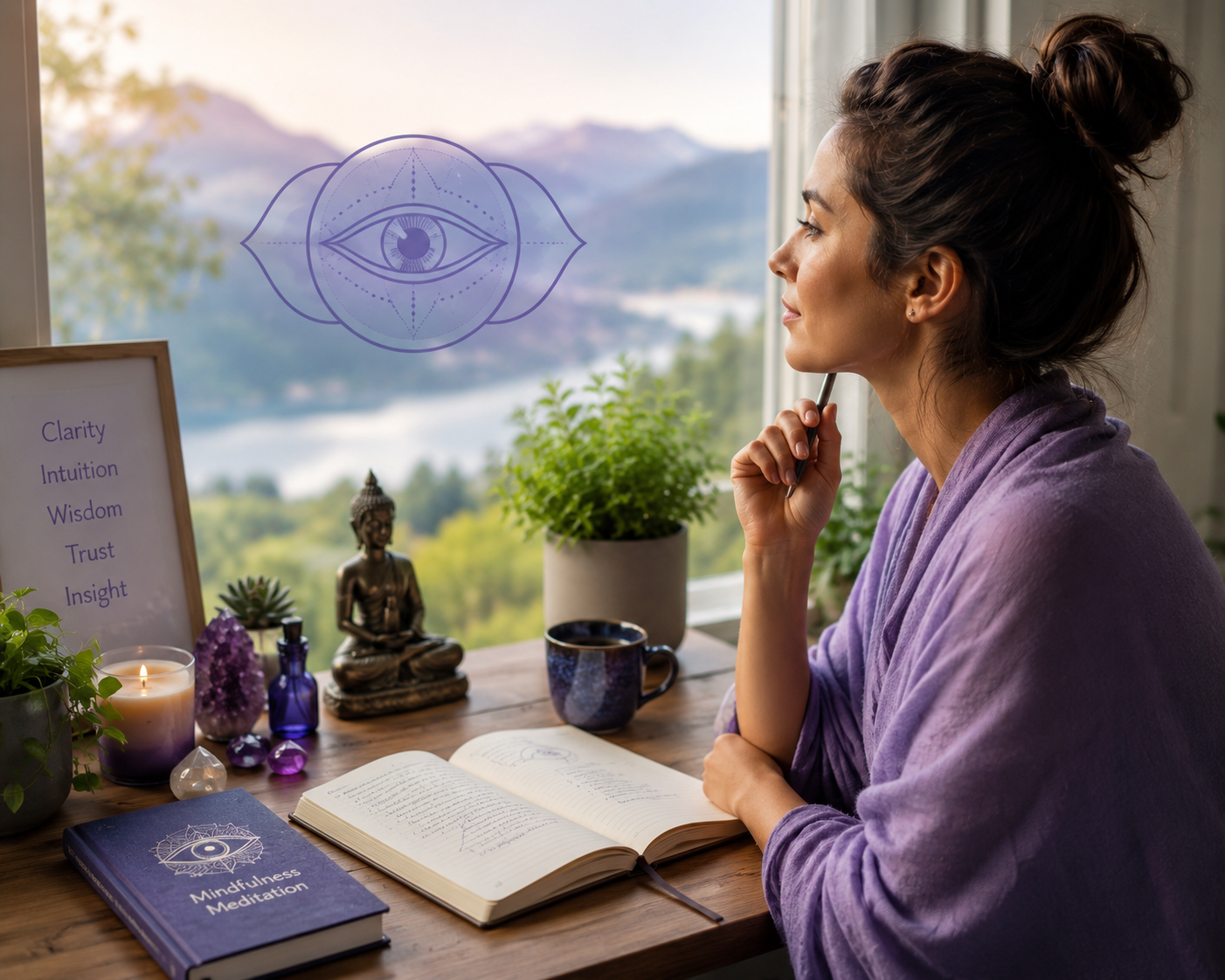
A balanced Third Eye Chakra supports clear thinking without overanalyzing every situation. Instead of becoming trapped in endless “what if” scenarios, you develop the ability to make thoughtful decisions with confidence and perspective.
Practices such as meditation, mindfulness, and spending time away from digital distractions can help cultivate greater mental clarity over time.
In many spiritual traditions, the Third Eye Chakra is associated with the brain, eyes, forehead, and nervous system. Because it represents perception and awareness, some people believe that prolonged mental stress or emotional overwhelm may contribute to tension in these areas.
While there is no scientific evidence that chakra imbalances directly cause medical conditions, chronic stress can influence concentration, sleep quality, and overall well-being. Practices such as meditation, mindful breathing, adequate rest, and stress management may help promote relaxation and mental clarity.
If you experience persistent headaches, vision changes, sleep disturbances, or other concerning symptoms, consult a qualified healthcare professional for appropriate evaluation and care.
Healing the Third Eye Chakra involves creating space for reflection, mindfulness, and inner awareness. Rather than seeking extraordinary experiences, these practices encourage you to quiet mental distractions and strengthen your connection with your own intuition and wisdom.
Meditation is one of the most effective ways to cultivate awareness of the Third Eye Chakra and quiet the constant flow of thoughts.
Sit comfortably with your eyes closed and bring your attention to the space between your eyebrows. Visualize a soft indigo light glowing at your Third Eye Chakra. With each inhale, imagine this light becoming brighter and expanding gently throughout your mind. As you exhale, release mental tension, confusion, and unnecessary worry.
Remain with this visualization for several minutes, allowing yourself to experience a sense of clarity, focus, and inner calm.
Mindful breathing helps calm the nervous system, making it easier to focus and connect with the present moment.
Try incorporating these breathing techniques into your daily routine:
As you breathe, imagine each inhale bringing greater clarity and each exhale releasing overthinking and mental clutter. Even five to ten minutes of intentional breathing each day can improve your ability to remain present and focused.

Journaling creates space for honest reflection and helps you better understand your thoughts, emotions, and recurring patterns.

Consider reflecting on questions such as:
Writing without judgment encourages self-awareness and helps transform scattered thoughts into meaningful insight.
The Third Eye Chakra flourishes when the mind has space to slow down.
Spending a few quiet moments each day without constant stimulation allows you to observe your thoughts more clearly. Whether through mindful walking, silent reflection, or simply sitting without distractions, these moments can strengthen your awareness of the present.
Over time, mindfulness helps you distinguish between automatic reactions and thoughtful responses, allowing intuition and wisdom to develop naturally.
Visualization is closely connected to the Third Eye Chakra because it encourages imagination, focus, and intentional awareness.
Spend a few minutes imagining yourself achieving a personal goal, navigating a challenging situation with confidence, or experiencing a sense of peace and clarity. The objective is not to predict the future but to strengthen your ability to focus your attention and explore new possibilities.
With regular practice, visualization can become a valuable tool for personal growth and creative thinking.
A busy mind can make it difficult to hear your own inner guidance.
Simple habits that support mental clarity include:
Reducing external noise allows your mind to process information more calmly and intentionally.
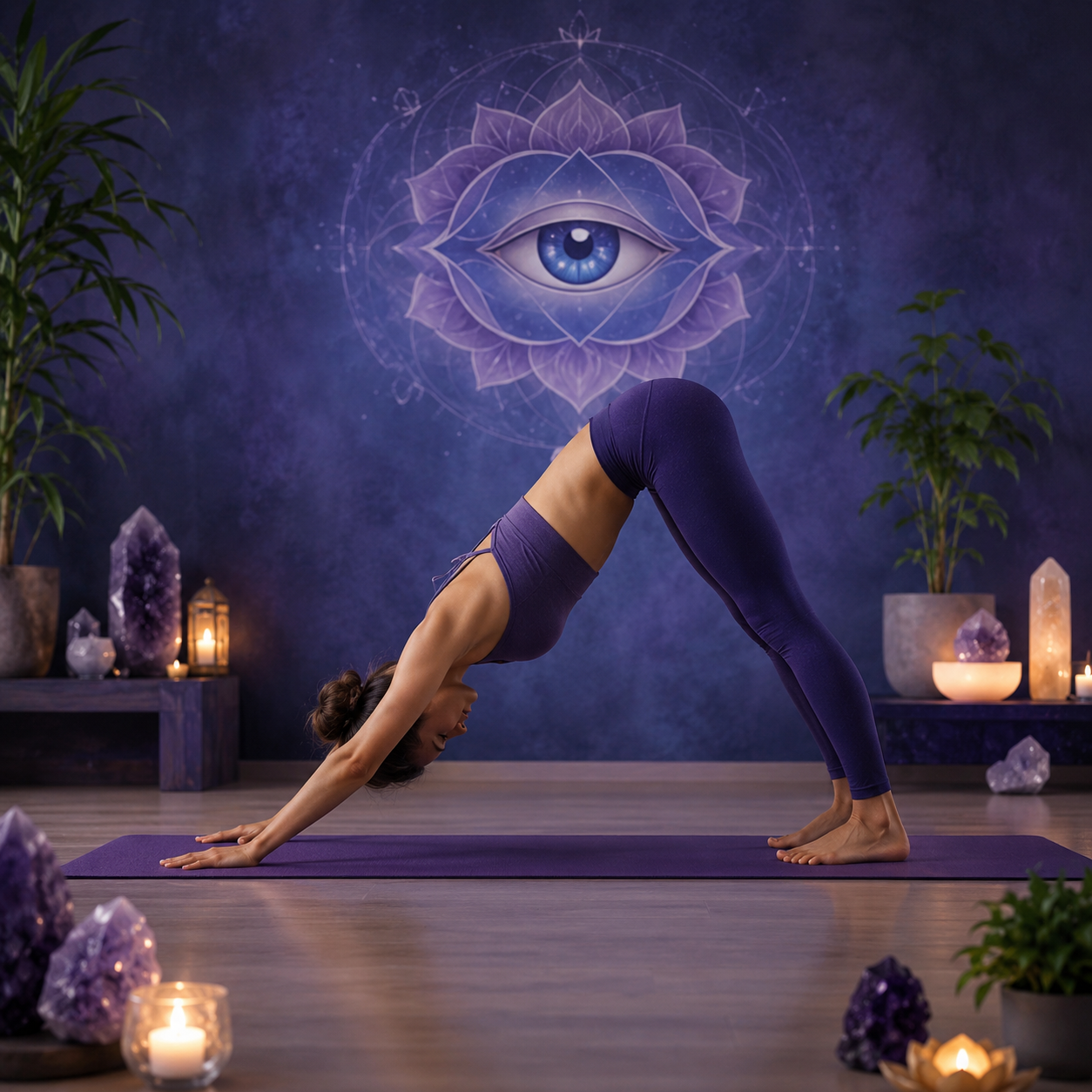
Yoga combines movement, breathing, and mindfulness to encourage concentration and inner awareness.
Poses commonly associated with the Third Eye Chakra include:
Practice each pose slowly while focusing on your breath and bringing gentle awareness to the space between your eyebrows. The goal is not flexibility but cultivating presence and mental stillness.
Many people use crystals during meditation or mindfulness practices as symbolic reminders of intuition, wisdom, and self-reflection.
Amethyst is one of the most popular crystals associated with the Third Eye Chakra. It is traditionally linked to inner peace, intuition, and spiritual awareness, making it a favorite for meditation and reflection.
Lapis Lazuli has long been associated with wisdom, self-awareness, and truth. Many people use it to encourage mental clarity and deepen their understanding of themselves.
Sodalite is often connected with logical thinking, intuition, and emotional balance. It may help promote clear communication between the mind and inner guidance.
Labradorite is traditionally associated with transformation, imagination, and personal growth. It is often used by those seeking to strengthen creativity and intuitive awareness.
Fluorite is commonly linked to focus, organization, and mental clarity. Many people use it to reduce mental distractions and improve concentration during meditation or study.
The Third Eye Chakra is traditionally associated with deep blue and purple foods, which symbolize wisdom, awareness, and inner reflection.

Examples include:
Some traditions also associate dark chocolate, herbal teas, and foods rich in antioxidants with mental clarity and mindful living.
Rather than focusing on specific foods as “healing,” view balanced nutrition as one part of a holistic approach to supporting your physical and emotional well-being.
Essential oils are often incorporated into meditation and mindfulness practices to create an environment that encourages relaxation and focused attention. While they are not a substitute for medical care, many people find them helpful as part of a holistic wellness routine.
Popular Third Eye Chakra essential oils include:
Diffuse these oils before meditation, add a few diluted drops to a warm bath, or inhale their aroma during quiet reflection. Combined with mindfulness and intentional breathing, they can help create a peaceful atmosphere that supports clarity, focus, and self-awareness.
Positive affirmations can help cultivate greater self-awareness, mental clarity, and trust in your intuition. When practiced consistently, they encourage a calmer mindset and remind you to approach life with curiosity, wisdom, and confidence.
Repeat these affirmations during meditation, journaling, or whenever you need to reconnect with your inner guidance:
Rather than rushing through the affirmations, pause after each one and reflect on its meaning. Allow the words to become gentle reminders of the clarity and wisdom you are cultivating within yourself.
This guided meditation can help you develop greater focus, self-awareness, and connection with your intuition.
Step 1
Sit comfortably with your spine straight and your shoulders relaxed. Rest your hands on your knees or comfortably in your lap.
Step 2
Close your eyes and begin taking slow, deep breaths. Allow your body to relax while bringing your full attention to the present moment.
Step 3
Focus your awareness on the space between your eyebrows. Visualize a soft indigo light glowing at your Third Eye Chakra.
Step 4
With every inhale, imagine this indigo light becoming brighter, filling your mind with clarity, wisdom, and peaceful awareness. With every exhale, release mental clutter, self-doubt, and unnecessary worry.
Step 5
Silently repeat the Third Eye Chakra mantra:
Step 6
Spend a few moments simply observing your thoughts without judging them. Let them come and go naturally, returning your attention to your breath whenever your mind begins to wander.
Step 7
Remain in this peaceful state for 10 to 15 minutes before slowly opening your eyes. Take one final deep breath and notice any sense of calm, clarity, or renewed perspective before continuing with your day.
Practicing this meditation regularly can help strengthen mindfulness, improve concentration, and deepen your connection with your inner wisdom.
The Third Eye Chakra is associated with intuition, insight, wisdom, imagination, mental clarity, and self-awareness. It influences how you interpret experiences, recognize patterns, and make thoughtful decisions while encouraging a deeper understanding of yourself and the world around you.
Common signs of a blocked Third Eye Chakra include overthinking, mental confusion, difficulty making decisions, lack of focus, self-doubt, and feeling disconnected from your intuition. Some people also report frequent headaches, mental fatigue, or trouble concentrating during stressful periods.
You can support your Third Eye Chakra through meditation, mindfulness, journaling, visualization, yoga, breathwork, and spending time in quiet reflection. Reducing mental distractions and creating space for self-awareness can also help strengthen your connection with your intuition.
Amethyst is one of the most popular crystals associated with the Third Eye Chakra because it is traditionally linked to intuition, inner peace, and spiritual awareness. Other commonly used crystals include Lapis Lazuli, Labradorite, Sodalite, and Fluorite.
Yes. Many people practice Third Eye Chakra meditation to improve concentration, mindfulness, and self-awareness. Visualizing an indigo light while repeating the mantra OM can help create a calm mental space that supports reflection and inner clarity.
The Third Eye Chakra is commonly associated with wisdom, trust, curiosity, and inner knowing. When imbalanced, it may be linked to confusion, self-doubt, fear of uncertainty, overthinking, or feeling disconnected from your intuition.
There is no fixed timeline. Some people notice greater mental clarity after a few weeks of consistent meditation and mindfulness practices, while others experience gradual changes over a longer period. Personal growth develops through regular practice, patience, and self-reflection.
A balanced Third Eye Chakra may help you approach decisions with greater clarity, self-awareness, and confidence. Rather than relying solely on emotion or logic, it encourages you to thoughtfully combine intuition, experience, and careful reflection.
The Third Eye Chakra reminds us that true wisdom comes from balancing intuition with thoughtful reflection. Rather than seeking certainty in every situation, Ajna encourages us to develop self-awareness, mental clarity, and trust in our ability to navigate life with insight and purpose.
Balancing the Third Eye Chakra doesn’t mean having all the answers or experiencing extraordinary spiritual abilities. Instead, it means learning to quiet mental distractions, observe your thoughts without judgment, and make decisions that reflect both your inner guidance and your lived experience.
Whether you choose to practice meditation, mindfulness, visualization, yoga, journaling, or simple moments of quiet reflection, each practice strengthens your connection to this energy center. Over time, these habits can help you cultivate greater focus, emotional resilience, creativity, and confidence in your own inner wisdom.
Remember that awakening the Third Eye Chakra is an ongoing journey of curiosity and self-discovery. By approaching life with openness, patience, and mindful awareness, you create space for deeper understanding, wiser decisions, and a stronger connection to your authentic self.