

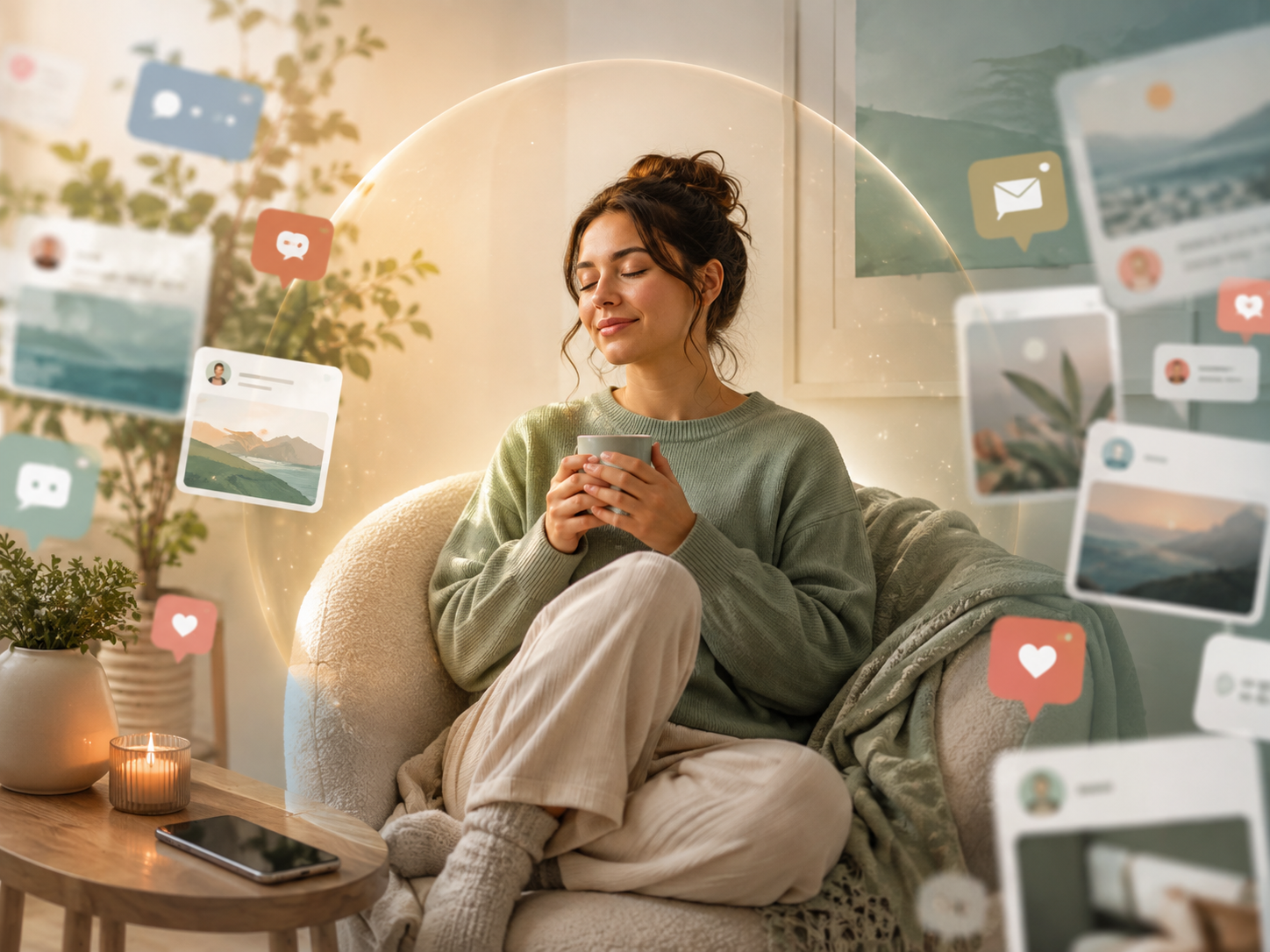
Social media can be a wonderful way to connect, learn, discover new ideas, and find inspiration. But spending too much time online can also leave you feeling overwhelmed, distracted, drained, or caught in comparison.
The good news is that you don’t have to completely disconnect from social media to protect your energy. You can simply become more intentional about what you consume, who you follow, and how much attention you give to the digital world.
Protecting your energy on social media is ultimately about creating healthier boundaries around your attention and emotional space.
Every day, social media exposes you to hundreds of opinions, images, conversations, advertisements, and personal stories. Even when you’re only scrolling for a few minutes, your mind is constantly processing new information.
This can affect how you feel without you immediately noticing it.
For example, you may open an app feeling relaxed and close it feeling anxious after comparing your life with someone else’s. You may also notice that certain accounts consistently leave you feeling negative, inadequate, frustrated, or emotionally exhausted.
This is why becoming aware of your social media energy matters.
Your attention is valuable. What you repeatedly give your attention to can influence your thoughts, emotions, and overall sense of wellbeing.
Social media can inspire, connect, and entertain us, but it can also affect our mood, attention, and sense of peace.
Protecting your energy online doesn’t mean disconnecting completely. It means being intentional about what you consume, who you follow, and how much time you give to the digital world.
Here are 10 simple ways to create healthier boundaries and protect your peace on social media.
Your social media feed doesn’t have to be a random collection of everything the algorithm recommends.
Take some time to notice what appears on your feed and, more importantly, how that content makes you feel.
Follow accounts that inspire, educate, entertain, or genuinely bring something positive into your day.
If an account constantly makes you feel stressed, jealous, angry, or inadequate, you don’t have to keep following it.
Your feed should support the experience you want to have online.
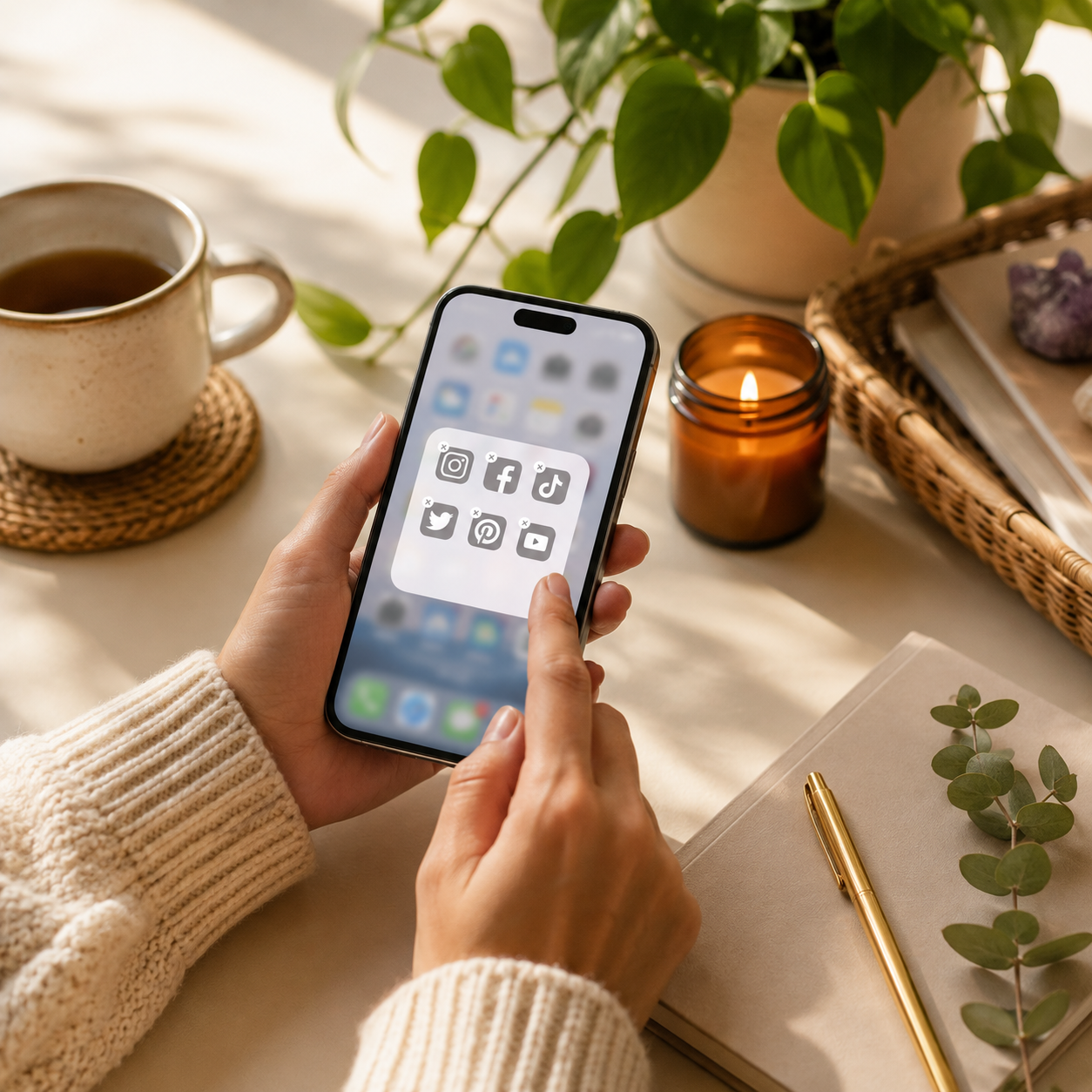
You don’t owe anyone a place on your social media feed.
Sometimes we continue following people because we’ve known them for years, because we’re afraid they might notice, or simply because unfollowing feels uncomfortable.
But protecting your energy sometimes means creating distance from content that no longer feels good for you.
You can unfollow, mute, or restrict an account without turning it into a personal conflict.
Think of it as creating digital boundaries rather than rejecting someone.
One of the easiest ways to lose your sense of peace online is to compare your everyday life with someone else’s highlight reel.
You may see someone’s new home, relationship, career, body, vacation, or financial success without seeing everything that exists behind the screen.
Social media gives us snapshots, not complete stories.
When comparison appears, gently remind yourself:
Their journey doesn’t make yours less valuable.
You don’t have to be where someone else is. Your life is allowed to unfold at its own pace.
The content you consume can affect you differently depending on your emotional state.
When you’re already stressed, lonely, frustrated, or tired, scrolling through negative news, arguments, or triggering content may make those feelings stronger.
Before opening social media, pause for a moment and ask:
“Is this what I need right now?”
Sometimes the most protective choice isn’t finding something better to watch. It’s putting the phone down.
You don’t need to spend hours scrolling to stay connected.
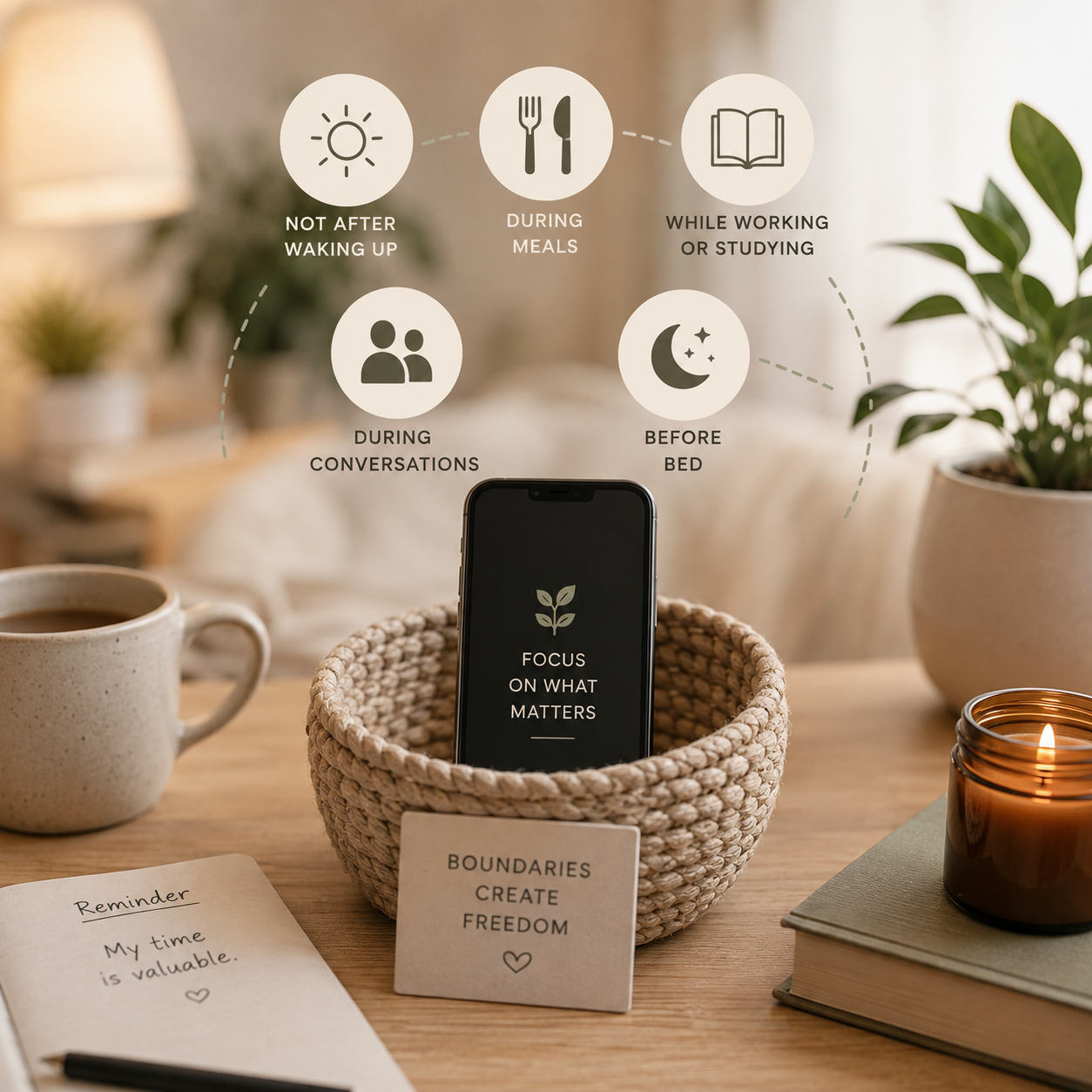
Try creating simple boundaries around when you use social media.
For example, you might decide not to check social media:
These small changes can help you reclaim your attention and create more space for your offline life.
You don’t have to wait until you’re completely overwhelmed before taking a break.
A short digital pause can help you reconnect with yourself and notice how much of your attention has been going toward your phone.
Try taking a few hours, an evening, or even a full day away from social media.
Use that time to walk, journal, meditate, read, exercise, spend time with someone you love, or simply do nothing.
Sometimes stepping away is enough to remind you that you don’t need to be constantly connected.
Not every opinion needs your response.
Social media can create the feeling that we need to defend ourselves, correct strangers, explain our choices, or participate in every debate.
You don’t.
Before commenting on something emotionally charged, ask yourself:
“Will engaging with this actually add something valuable to my life?”
If the answer is no, scrolling past can be an act of self-respect.
Protecting your energy doesn’t mean avoiding every difficult conversation. It means becoming intentional about which conversations deserve your attention.
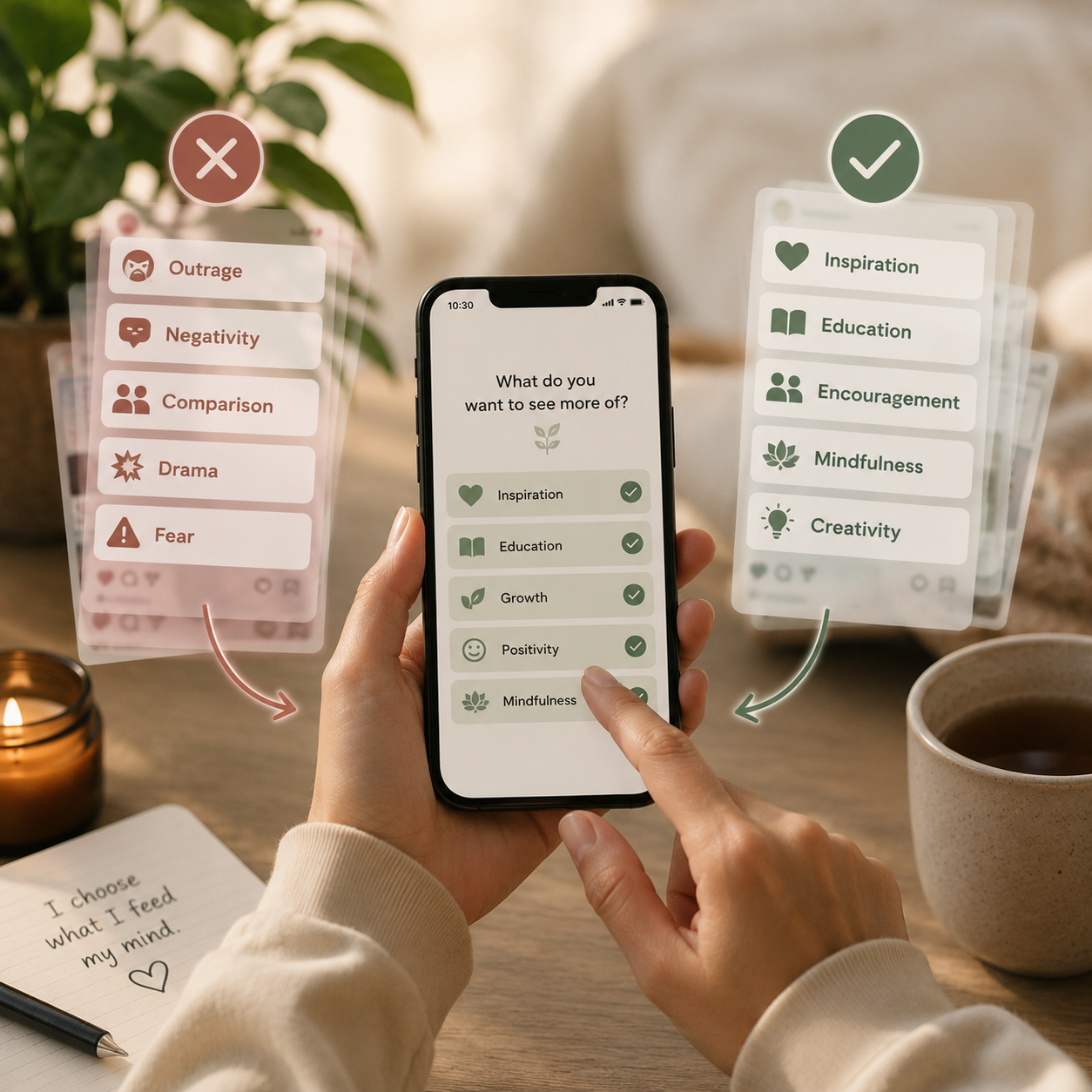
Social media algorithms pay attention to what you watch, like, comment on, and share.
That means your engagement helps shape what you see next.
If you repeatedly interact with content that makes you angry or anxious, you may end up seeing more of it.
Instead, consciously engage with content that reflects the experience you want to create online.
Save inspiring posts. Follow educational creators. Interact with encouraging communities. Explore topics that genuinely interest you.
Your digital environment is partly shaped by your choices.
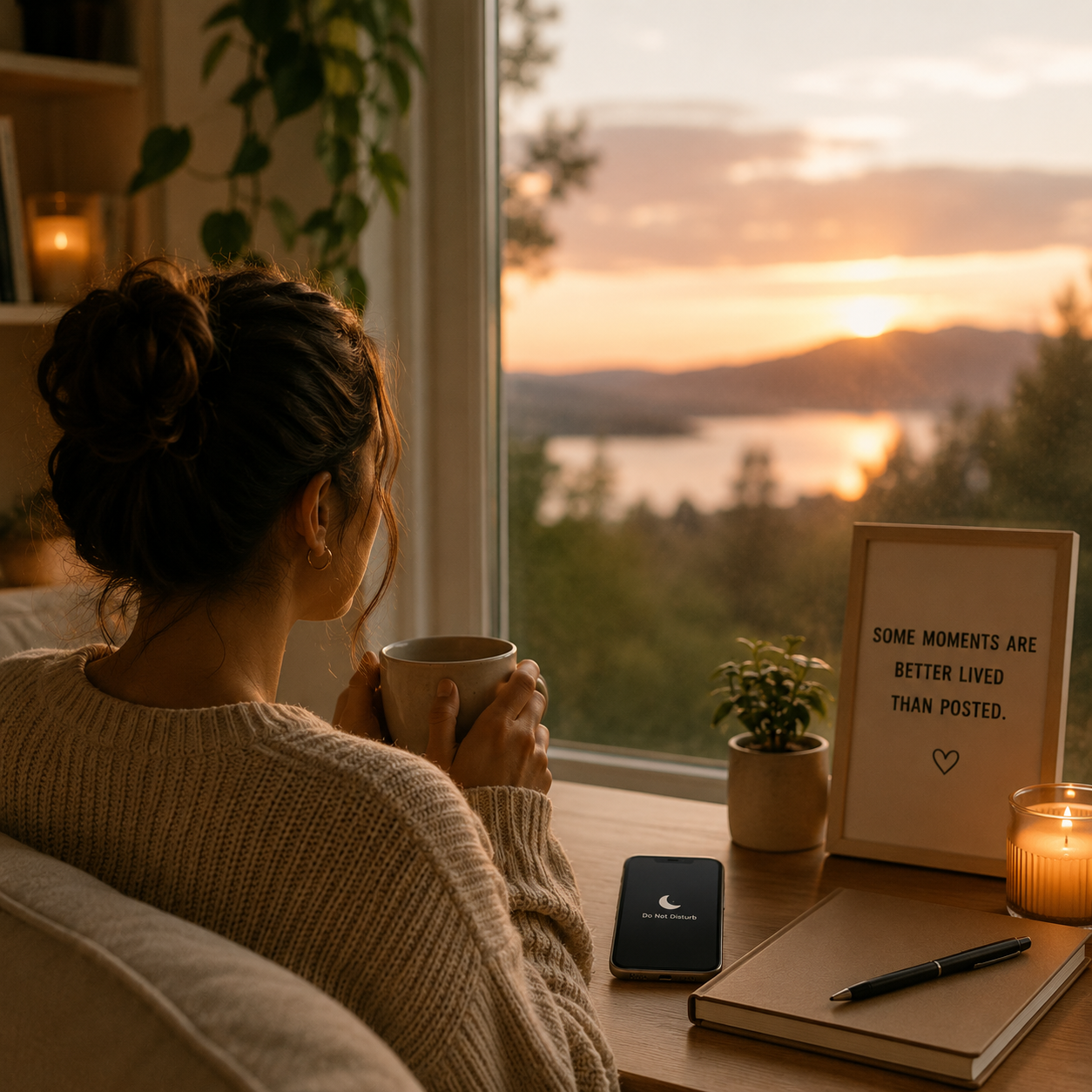
Not everything needs to be shared online.
Keeping certain experiences private can create a beautiful sense of personal space.
You don’t have to document every achievement, relationship, plan, struggle, or meaningful moment.
Some experiences become even more special when you allow yourself to experience them without immediately turning them into content.
Ask yourself:
“Do I want to share this, or do I simply want to experience it?”
There is no right or wrong answer. The important thing is that the decision comes from you.
Pay attention to how you feel after using social media.
Do you feel inspired or drained?
Connected or isolated?
Calm or anxious?
Motivated or inadequate?
Your emotional response can give you useful information about your relationship with social media.
If you consistently feel worse after scrolling, it may be time to step back and reassess what you’re consuming and how you’re using these platforms.
Disconnecting isn’t necessarily about abandoning social media.
Sometimes it’s simply about reconnecting with yourself.

Self-care isn’t only about candles, skincare, relaxing baths, or quiet mornings.
Sometimes self-care looks like muting an account.
Sometimes it means refusing to participate in an argument.
Sometimes it means closing an app instead of continuing to scroll.
And sometimes it means protecting a part of your life from the pressure to share it with everyone.
Setting digital boundaries allows you to decide where your attention goes instead of allowing your feed to make that decision for you.
You don’t have to delete every social media app or disappear from the internet.
The goal isn’t necessarily to use social media less. It’s to use it more intentionally.
Before opening an app, consider what you’re looking for.
Are you connecting with someone?
Looking for inspiration?
Learning something?
Taking a short break?
Or are you simply scrolling because you’re bored?
Being intentional can completely change your relationship with social media.
Instead of automatically consuming whatever appears in front of you, you become more conscious of what deserves your attention.
If you’ve been feeling drained by social media lately, try this quick reset.
Step 1: Review your following list.
Mute or unfollow accounts that consistently affect your mood negatively.
Step 2: Clean up your feed.
Interact more with content that makes you feel inspired, informed, peaceful, or motivated.
Step 3: Create one digital boundary.
Choose one period of the day when you won’t use social media.
Step 4: Take a short break.
Spend a few hours without checking your social apps.
Step 5: Notice how you feel.
Pay attention to whether your mood, focus, or sense of calm changes.
You don’t need to completely transform your digital habits overnight. Small changes can create meaningful differences over time.
Need help unplugging?
If stepping away from social media feels easier with a little guidance, try listening to our Digital Detox Meditation Music. Gentle ambient sounds, warm harp, ethereal piano, and subtle nature sounds create a peaceful space to disconnect from digital noise, slow your breathing, and reconnect with yourself.
Your attention is one of your most valuable resources.
Every scroll, click, comment, and view is a small decision about what you allow into your mental and emotional space.
That doesn’t mean you need to avoid everything negative or create a perfectly positive online environment. Life isn’t that simple.
Instead, aim for awareness.
Notice what drains you. Notice what inspires you. Notice what makes you compare yourself to others. And notice what helps you feel connected to the person you want to become.
Social media can be part of your life without controlling your attention.
Protect your energy by becoming intentional about what you give your attention to.
Start by curating your feed, setting screen-time boundaries, muting accounts that negatively affect you, and taking regular breaks. Pay attention to how different types of content make you feel and adjust your habits accordingly.
Yes. You are allowed to create boundaries around the content you consume. Muting or unfollowing someone can be a simple way to protect your digital environment without creating unnecessary conflict.
Social media can influence mood, attention, self-perception, and stress levels. Its effects can vary from person to person and depend on factors such as the type of content consumed, time spent online, and individual circumstances.
There isn’t one ideal schedule for everyone. Even short breaks can be useful. Consider taking a few hours away from social media when you notice that scrolling is affecting your mood, focus, or ability to be present.
Remember that social media usually shows selected moments rather than someone’s complete reality. When you notice comparison, redirect your attention toward your own goals, progress, values, and timeline.
Not necessarily. Some people benefit from completely disconnecting, while others can have a healthier relationship with social media by setting boundaries and becoming more intentional about how they use it.
You don’t have to protect your energy by shutting the world out.
Sometimes, protecting your energy simply means becoming more selective about what you allow into your world.
Choose your content. Choose your boundaries. Choose where your attention goes.
And remember: you are allowed to create a digital space that feels as peaceful as the life you’re building offline.