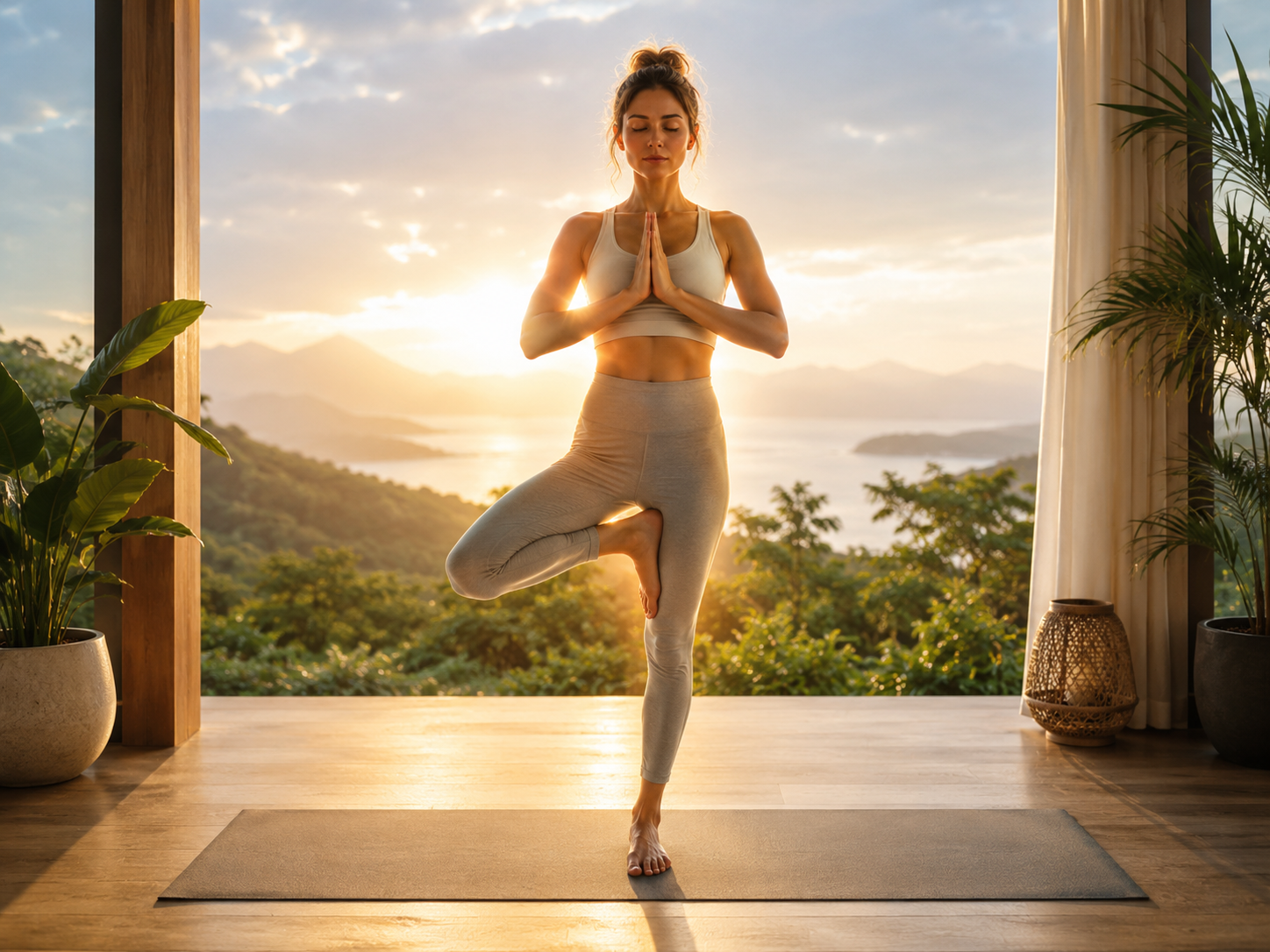

Can you use yoga as part of a manifestation practice?
Yes. Yoga can be a simple way to create a dedicated space for movement, conscious breathing, focus, and intention setting. Instead of treating manifestation as something you only practice while sitting still, you can bring your intention into a physical practice and use your time on the mat to become more focused and present.
Yoga does not guarantee that a particular desire will become reality. However, it can complement a manifestation routine by helping you slow down, become more aware of your thoughts and emotions, and connect your intentions with purposeful action.
In this guide, you’ll learn how to use yoga for manifestation, which poses you can incorporate, when to visualize, how to use affirmations, and how to create a simple 10-minute yoga manifestation routine.
Yoga and manifestation can be combined through a simple principle: use your physical practice to create space for intentional mental focus.
A yoga session can move through several stages:
Movement → Breathing → Focus → Intention → Visualization → Action
The physical practice helps you transition away from everyday distractions. Conscious breathing gives you an anchor for your attention. Yoga itself commonly combines physical postures, breathing techniques, and meditation, according to the National Center for Complementary and Integrative Health, part of the National Institutes of Health.
Once your mind becomes quieter, you can focus on the intention you want to cultivate.
This doesn’t require believing that yoga has the power to attract a specific external event.
Instead, you can think of yoga as the setting for your manifestation practice.
Your intention provides the direction, while your choices and actions determine how you move toward it.
You don’t need a complicated routine to combine yoga with manifestation. A few intentional movements, conscious breaths, and moments of stillness can be enough to create a practice that feels both meaningful and practical. The key is to connect your physical practice with a clear intention and allow that intention to guide your focus.
Start by choosing one intention for your practice.
Try to avoid creating a long list of things you want to manifest. Focusing on one intention makes it easier to keep your attention on what matters.
Your intention could relate to:
Instead of focusing only on the final result, consider the quality you want to cultivate along the way.
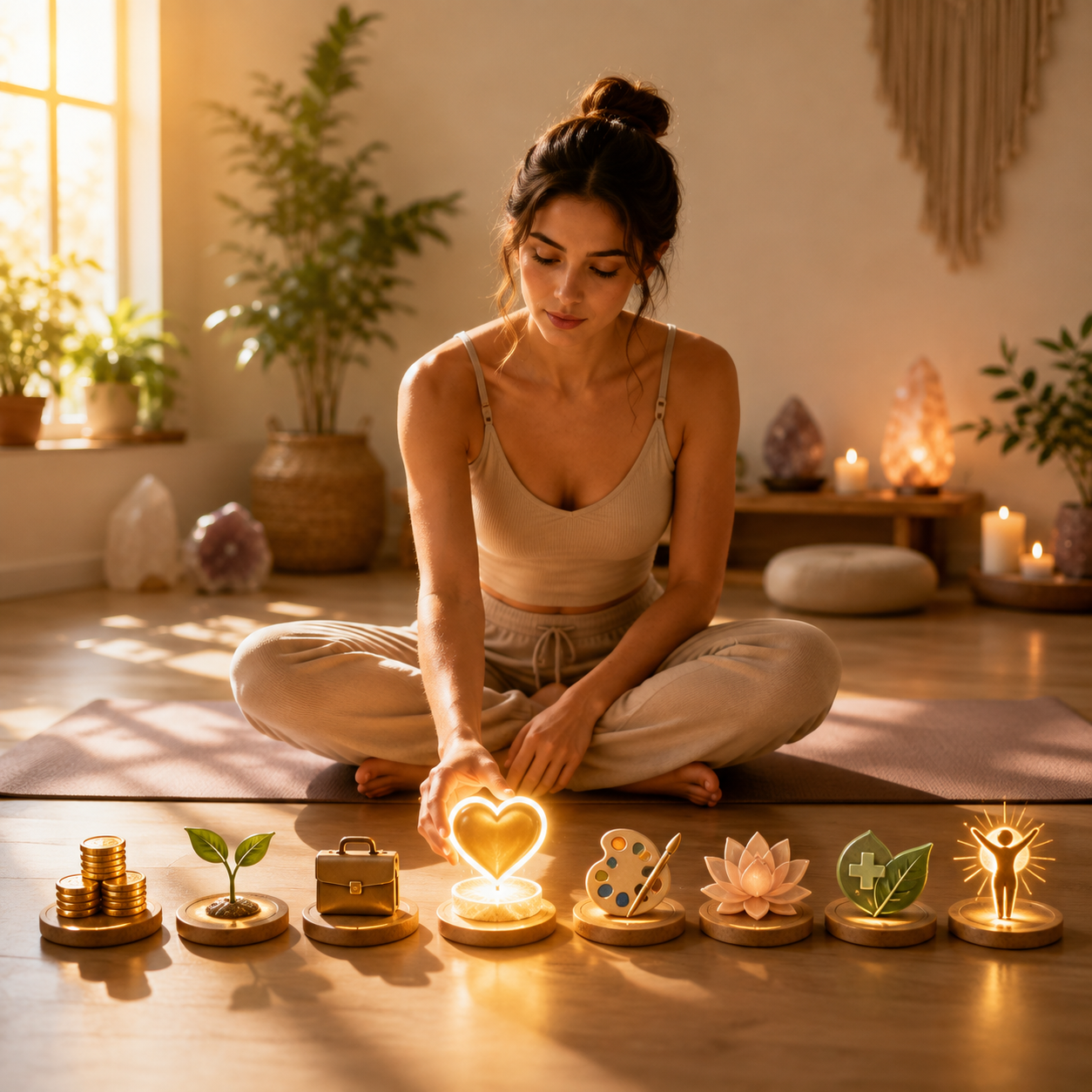
“I want to become more confident in expressing myself.”
This gives you something you can connect to your thoughts, emotions, and actions during your practice.
Before moving into your yoga poses, spend one or two minutes focusing on your breath.
Sit or lie down comfortably.
Notice your natural breathing without trying to force it.
As you inhale, bring your attention back to the present moment.
As you exhale, allow yourself to release some of the distractions from your day.
You can silently repeat your intention once or twice, but you don’t need to force yourself to visualize anything yet.
The purpose of this stage is simply to transition into a more focused state.
Begin your yoga practice and allow your intention to influence the qualities you focus on.
For example, if your intention is confidence, you might pay attention to stability and strength during standing poses.
If your intention is patience, you might notice what happens when a balancing pose becomes difficult.
If your intention is letting go, you might use slower, restorative postures and observe your tendency to control the experience.
The pose itself isn’t what creates the desired outcome.
Instead, the pose becomes an opportunity to practice the quality associated with your intention.
The quieter part of your yoga practice can be a natural moment for visualization.
After completing your poses, sit or lie comfortably and allow your breathing to return to normal.
Then bring your intention to mind.
Rather than imagining only the perfect final outcome, try visualizing yourself participating in the process.

For example, if you want to manifest career growth, imagine yourself:
This makes visualization less about simply imagining that something has already happened and more about creating a mental picture of how you want to move toward it.
Once your visualization is complete, choose a short affirmation that supports your intention.
For example:
“I trust myself to take purposeful steps toward my goals.”
Then ask yourself one final question:
What is one action I can take today?
It could be something very small.
This final step connects your inner practice with your everyday life.
Yes, you can keep an intention in mind while practicing yoga.
However, you don’t need to spend the entire session repeating affirmations or visualizing your desired outcome.
In fact, trying too hard to maintain a specific thought while balancing, moving, and breathing may make the practice feel forced.
A more natural approach is to divide your practice into different stages.
During movement: focus primarily on your body and breathing.
During stillness: reconnect with your intention.
After the physical practice: use visualization, meditation, or affirmations.
This allows yoga to remain a yoga practice while creating a natural transition into your manifestation routine.
There is no scientific evidence that a particular yoga pose can directly attract money, love, success, or another external outcome.
However, you can use different poses symbolically to focus on qualities that support your intentions.
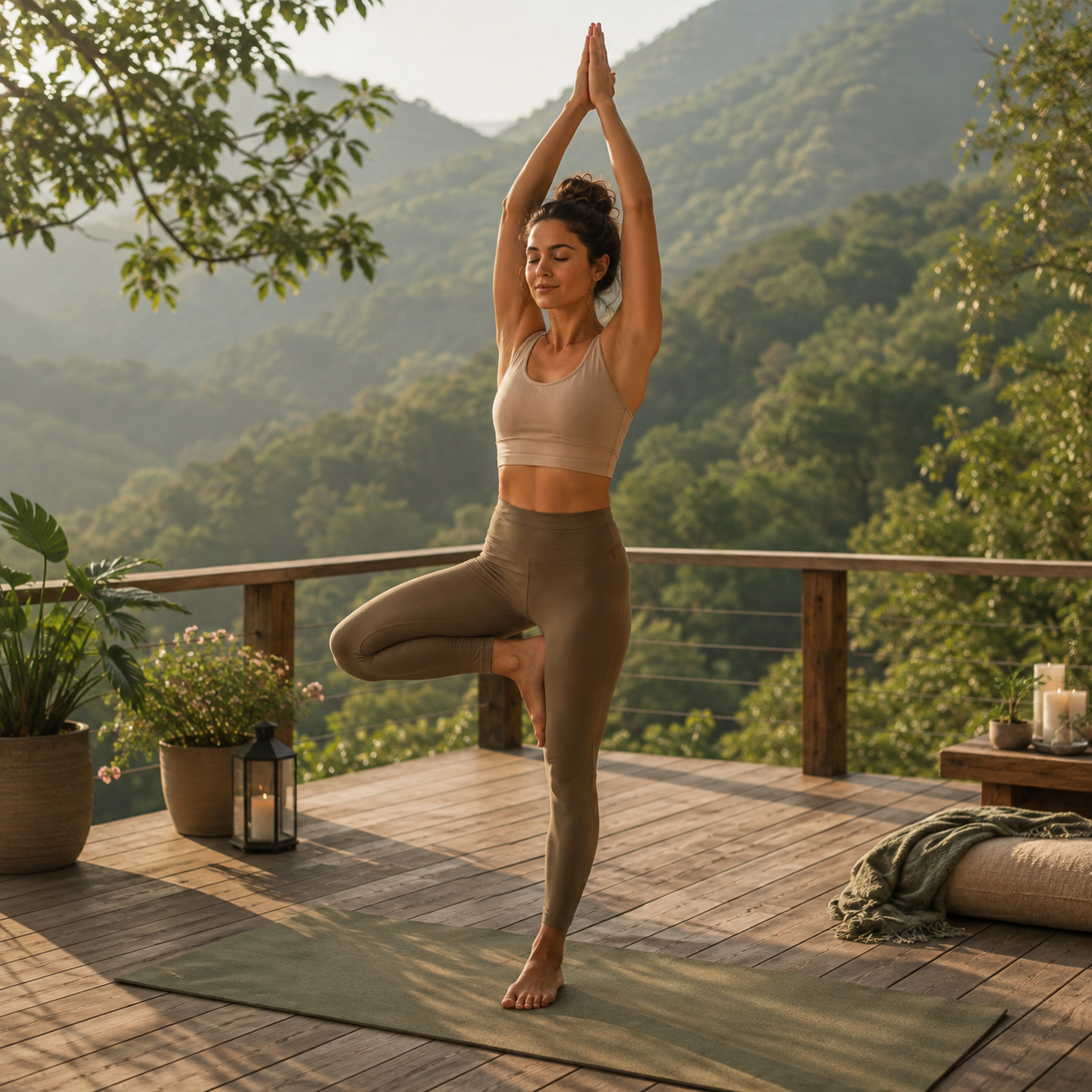
Vrksasana, or Tree Pose, challenges your balance and concentration.
If your intention involves focus, patience, or finding greater balance in your life, use the pose as an opportunity to observe your attention.
When your mind wanders and your body becomes unstable, simply return your attention to your breath and try again.
Try this intention:
“I return to what matters, one step at a time.”

Virabhadrasana II, or Warrior II, is a strong standing posture that requires stability and sustained attention.
It can complement intentions related to confidence, courage, determination, and purposeful action.
While holding the pose, think about one area of your life where you would like to trust yourself more.
Try this intention:
“I trust myself to take courageous action.”
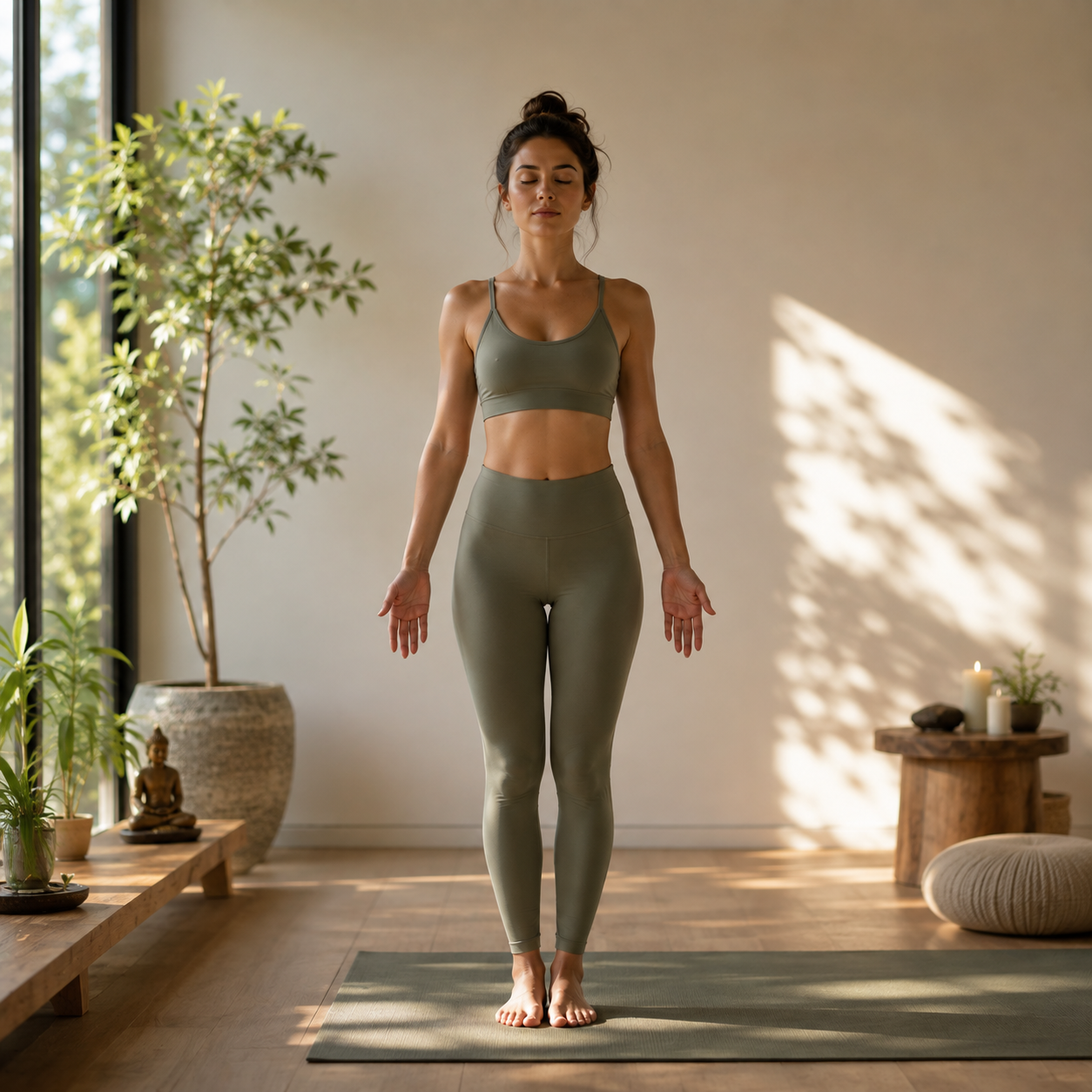
Tadasana, or Mountain Pose, may look simple, but it provides an opportunity to practice awareness of posture, balance, and breathing.
Use it when your intention involves feeling more grounded or present.
Stand comfortably with your feet connected to the floor and bring your attention to your breathing.
Try this intention:
“I am grounded in the present moment.”
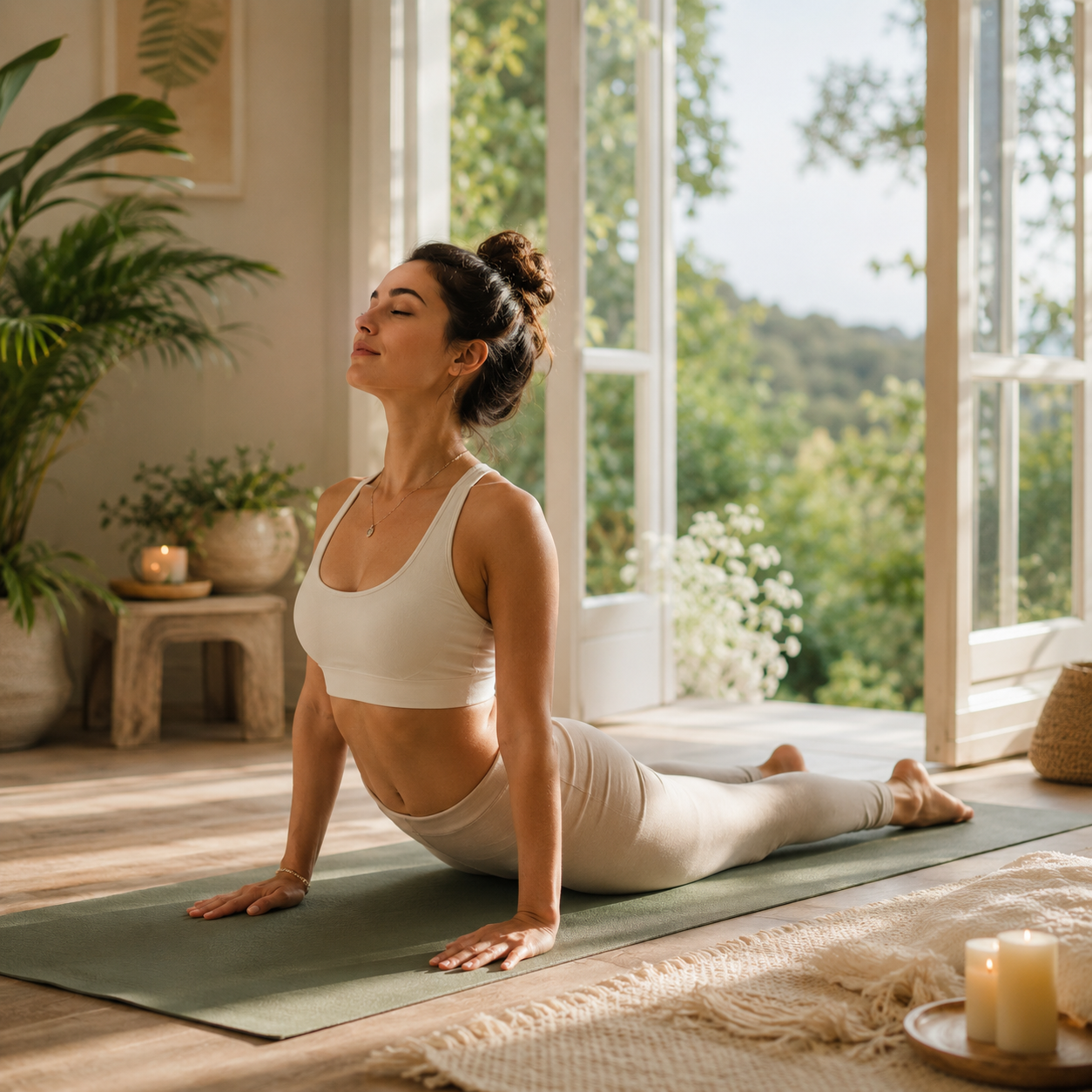
Bhujangasana, or Cobra Pose, can be incorporated into an intention focused on openness and courage.
As you gently lift your chest, pay attention to your breathing and physical sensations.
Rather than imagining that the pose will attract a specific result, consider what it means for you to become more open to possibilities.
Try this intention:
“I am open to new possibilities.”
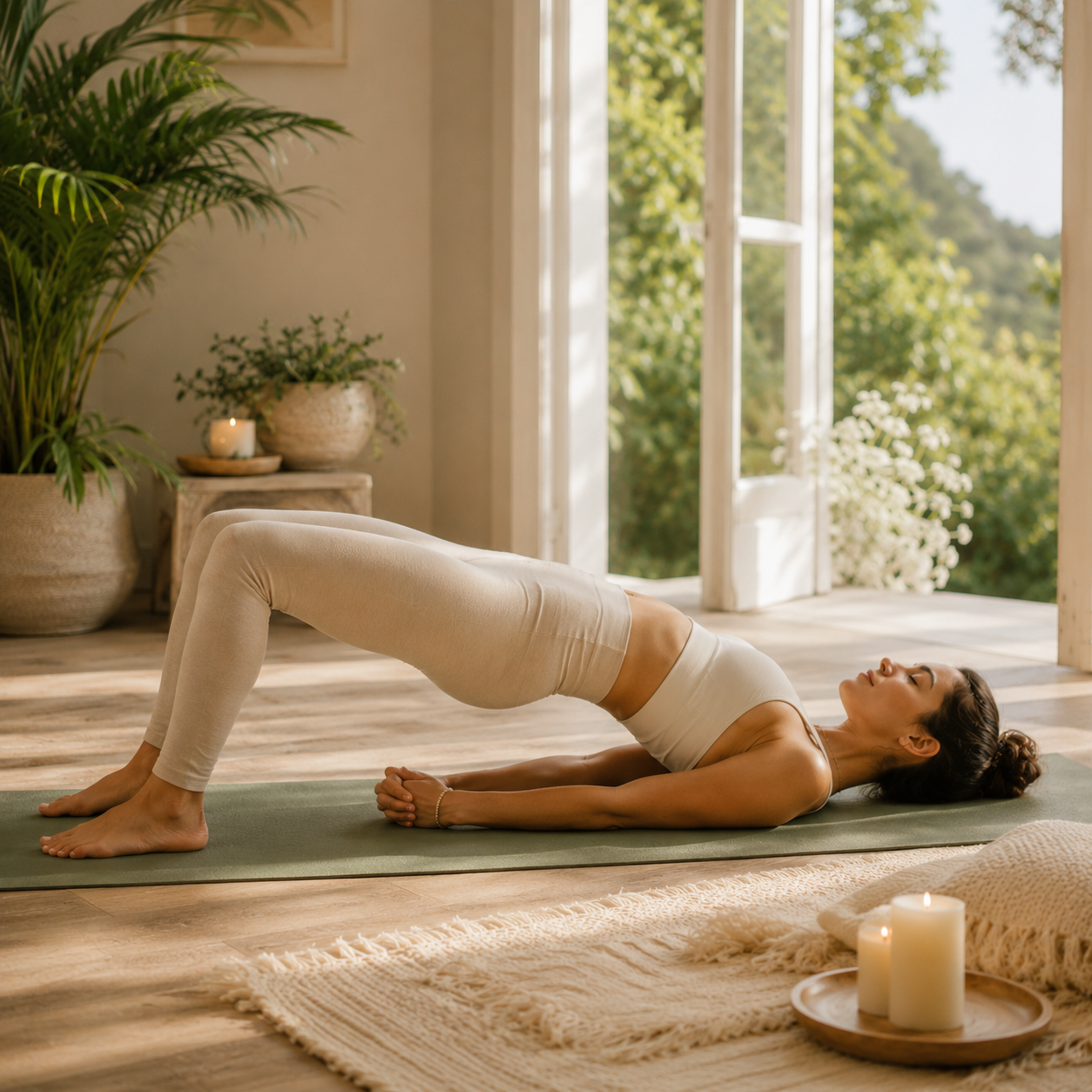
Setu Bandhasana, or Bridge Pose, can be used symbolically when working with intentions related to growth and expansion.
Move into the pose comfortably and notice how your body responds.
Try this intention:
“I allow myself to grow beyond what feels familiar.”
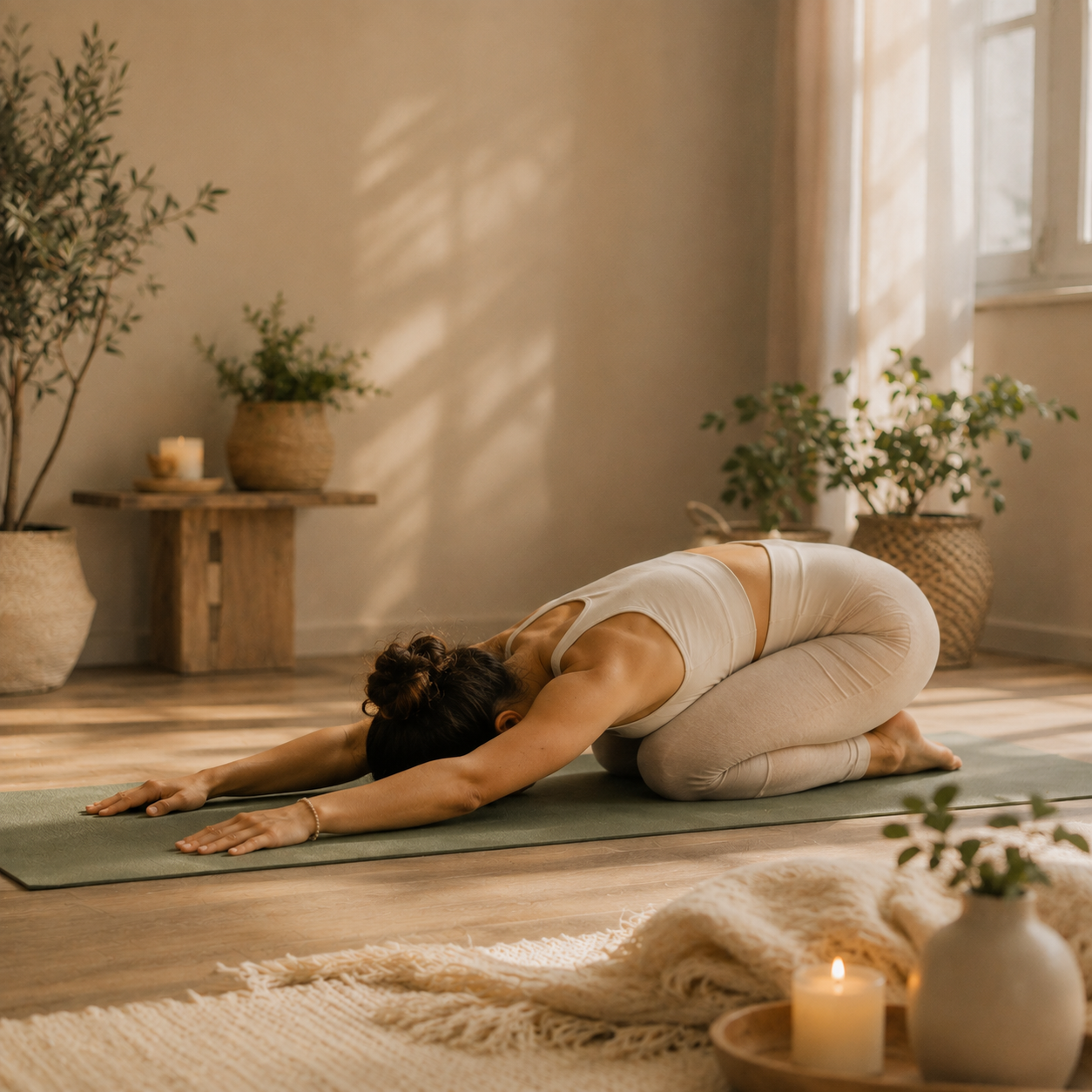
Balasana, or Child’s Pose, offers a quieter moment for reflection.
It can complement intentions related to releasing excessive control, practicing patience, or making space for rest.
As you settle into the pose, ask yourself:
What am I holding onto too tightly?
Try this intention:
“I release the need to control every detail.”
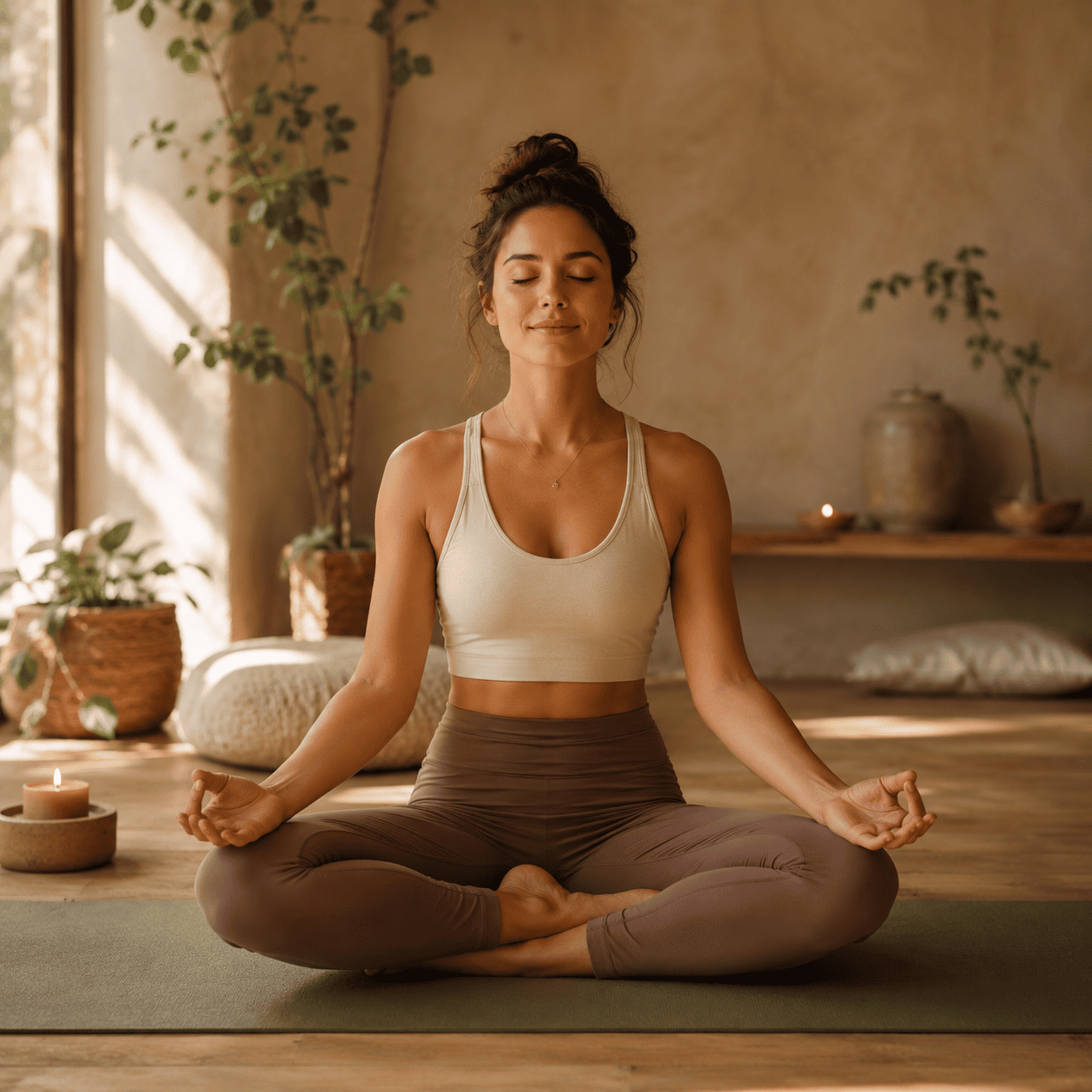
Sukhasana, or Easy Pose, is a comfortable seated posture that can be used for breathing, meditation, visualization, or intention setting.
It is particularly useful at the beginning or end of your practice.
Sit comfortably, close your eyes if you wish, and bring your intention to mind.
Try this intention:
“I am clear about the direction I want to take.”
If you want to combine yoga and visualization, you don’t have to visualize during every pose.
For many people, the final few minutes of the practice may be a more comfortable time.
Once you are still, visualize your intention in a way that feels realistic and meaningful.
Instead of focusing exclusively on an imagined final result, consider three elements:
What would you like to experience?
What would you need to do to move toward it?
How would you like to respond when challenges or unexpected opportunities appear?
For example, someone who wants to grow a business might visualize not only having more clients, but also communicating confidently, creating valuable work, learning from mistakes, and remaining consistent.
This approach keeps visualization connected to behavior rather than treating it as a substitute for action.
Yes. Affirmations can be incorporated into yoga, but the way you use them matters.
You can repeat an affirmation:
Try to choose an affirmation that relates directly to your intention.
For example:
“I trust my ability to handle new challenges.”
“I am open to recognizing opportunities for growth.”
“I am open to giving and receiving love with awareness.”
“I allow myself to learn and grow through new experiences.”
“I take meaningful steps toward my goals every day.”
There is no single time of day that guarantees better manifestation results.
The best time is generally the time when you can practice consistently and with minimal distractions.
However, different times of day can support different intentions.
Morning practice can be useful if you want to begin your day with a clear intention.
You can finish your practice by deciding what quality you want to carry into the day.
For example:
“Today, I choose to act with confidence.”
An evening practice can provide an opportunity to reflect on the day.
You can consider what went well, what you learned, and what you want to release before going to sleep.
You don’t need to wake up at a specific hour or practice according to a particular manifestation schedule.
A short practice that you can maintain regularly may be more useful than an elaborate routine you rarely follow.
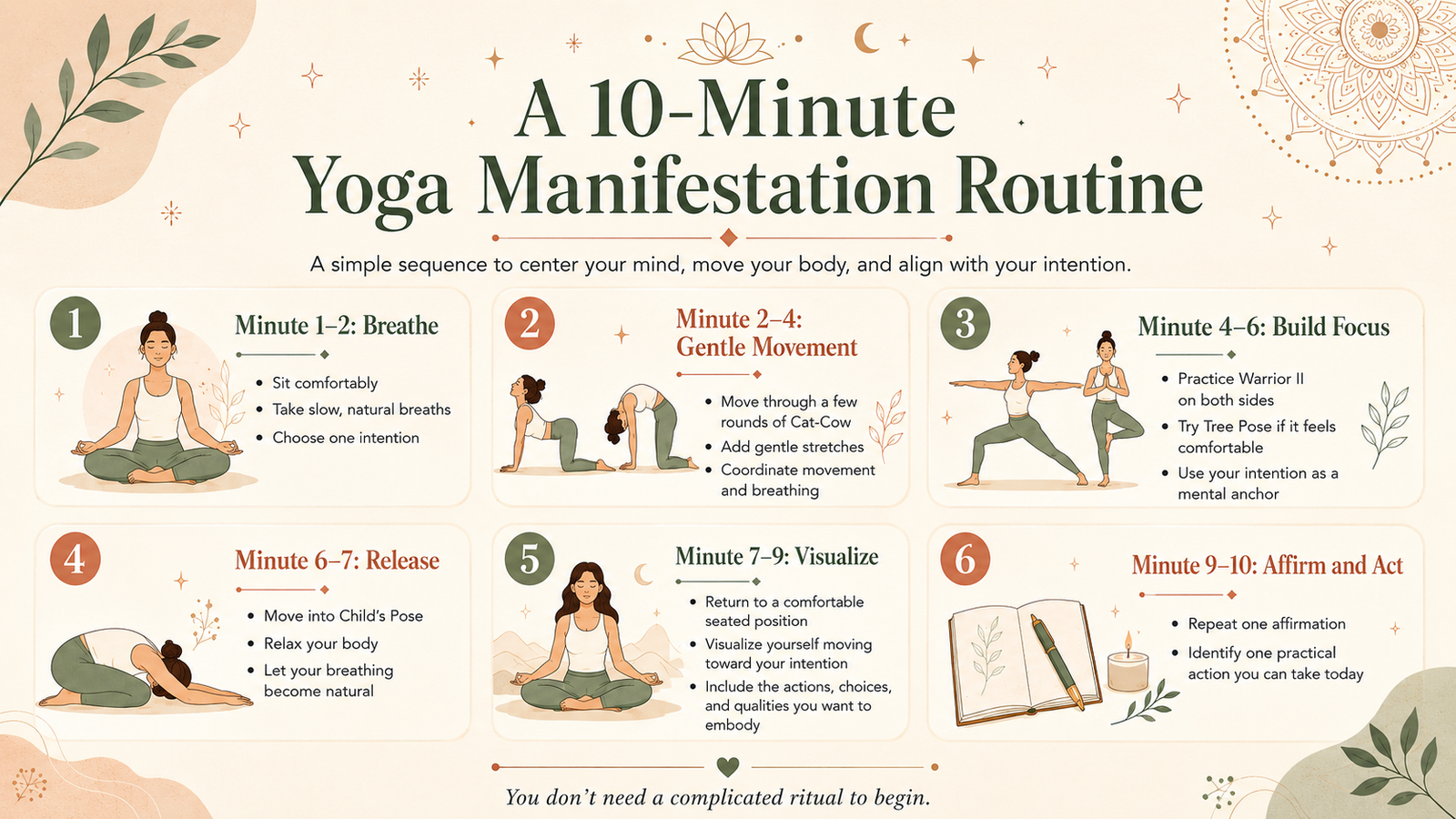
If you want to explore yoga for manifestation but don’t know where to begin, this simple 10-minute routine offers an easy way to bring the two practices together. Through mindful breathing, gentle movement, focused poses, visualization, and a clear intention, you can create a moment to connect with what you want while staying grounded in the actions that can help you move toward it.
Sit comfortably.
Take slow, natural breaths and choose one intention.
Move through a few rounds of Cat-Cow, followed by gentle stretches.
Focus on coordinating movement and breathing.
Practice Warrior II on both sides, followed by Tree Pose if it feels comfortable.
Use your intention as a mental anchor.
Move into Child’s Pose.
Relax your body and allow your breathing to become natural.
Return to a comfortable seated position.
Visualize yourself moving toward your intention.
Include the actions, choices, and qualities you want to embody along the way.
Repeat one affirmation.
Then identify one practical action you can take today.
That’s it.
You don’t need a complicated ritual to practice yoga for manifestation. Start with a clear intention, stay present through your practice, and let your actions carry that intention into your everyday life.
Your yoga practice doesn’t have to end when you leave the mat.
The few minutes immediately afterward can be useful for turning your intention into something practical.
You could:

Write down what came to mind during your practice.
If you use manifestation journaling, this can be a natural time to continue that practice.
Think of three things you genuinely appreciate.
For more inspiration, explore our article on What is Gratitude? and discover simple ways to bring more gratitude into your daily life.
Ask whether your intention still feels meaningful.
Sometimes a quiet practice reveals that what you thought you wanted is different from what you actually need.
Choose one realistic step.
This is perhaps the most important part.
Your practice can help you clarify your direction, but your everyday actions are what allow you to make progress.
Yoga can complement manifestation, but it is important to understand what that means.
There is no scientific evidence that performing a particular yoga pose can directly cause an external event to occur.
What yoga can provide is a structured practice for movement, breathing, concentration, reflection, and consistency. Research summarized by the National Center for Complementary and Integrative Health suggests that yoga may support aspects of general well-being, including stress management, mental and emotional health, sleep, and balance.
Those qualities can be useful when working toward personal goals because they create opportunities to become more aware of your thoughts, emotions, habits, and choices.
For example, if you are working toward greater financial abundance, yoga will not guarantee that money appears in your life.
But a regular practice might give you a moment to recognize anxiety around money, clarify what financial security means to you, and think about practical actions you can take.
In this sense, yoga can support the process of intentional living without replacing practical effort.
Once you understand the basic structure, you can personalize your routine.
Start by choosing one intention.
Then decide:
For example:
This approach turns a yoga session into more than a physical routine. It becomes a structured moment for reflection, intention, and action.
Yoga can be a meaningful complement to a manifestation practice because it gives you a physical space to slow down, breathe, focus, and reconnect with your intentions.
You don’t need to believe that a particular pose has the power to attract a specific outcome.
Instead, you can use your practice to become more present, clarify what matters to you, visualize the direction you want to take, and identify the actions that can move you forward.
Then take one small step in the real world.
Your yoga practice happens on the mat, but your intentions come to life through the choices you make beyond it.
Yes. You can keep a specific intention in mind during your yoga practice. However, you may find it easier to focus on your breathing and movement during the physical practice and use the final minutes for visualization or affirmations.
There is no scientifically proven “manifestation pose.” You can choose poses according to the quality you want to cultivate. For example, Tree Pose can represent focus and balance, while Warrior II can be used to reflect on confidence and determination.
Choose one intention, begin with conscious breathing, practice yoga while focusing on a related quality, finish with visualization or an affirmation, and identify one practical action you can take afterward.
Yes, although it may be easier to visualize during stillness rather than while performing challenging poses. The final minutes of a yoga practice can provide a natural transition into visualization.
Yes. Affirmations can be repeated before, during gentle poses, or after your physical practice. Choose an affirmation that directly relates to the intention you are working with.
There is no specific time scientifically proven to make manifestation more effective. Morning yoga can be useful for setting an intention for the day, while evening yoga can provide time for reflection. Consistency is more important than a specific hour.
You can start with 10 minutes. A short, consistent practice can include breathing, movement, visualization, and intention setting without requiring a long yoga session.
After yoga, you can journal, practice gratitude, visualize your intention, repeat an affirmation, or choose one practical action related to your goal. Using the quiet period after practice for reflection can help connect your intention with everyday behavior.
Yoga cannot guarantee that a particular external outcome will happen. It can, however, provide a structured opportunity to practice focus, self-awareness, reflection, and intentional action as part of a broader manifestation practice.